

The factors that determine the service life of prefabricated, container and light steel buildings; an annual maintenance list for roof, facade, joints, panels and services; galvanic protection and common mistakes.
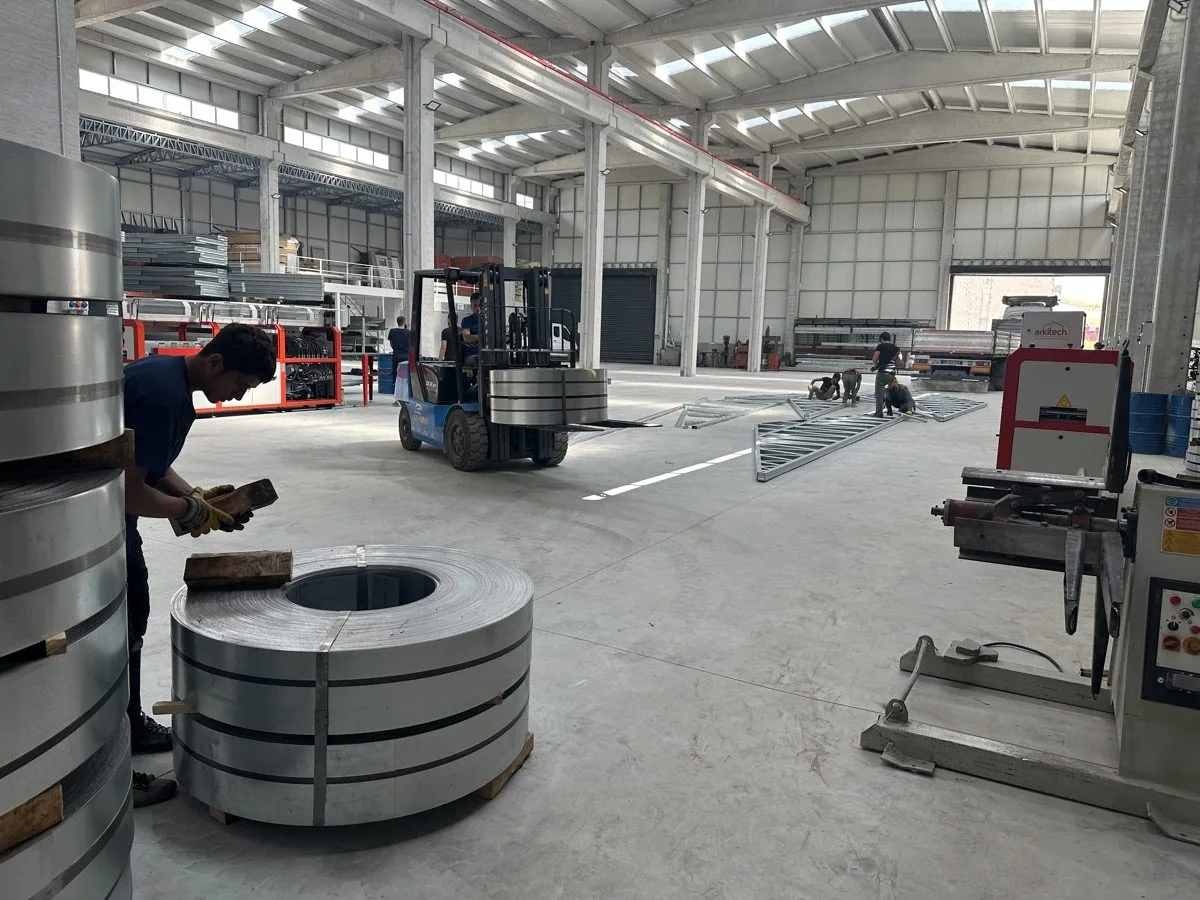
The answer to the question "how many years does a prefabricated building last?" depends more on maintenance than on material. A galvanized steel structural system serves for decades in a properly detailed and maintained building; the same building causes problems within a few years with a leaking roof joint. In this article we give the factors that determine service life and the annual maintenance list.
Roof: Gutters and downpipes are cleaned; cladding screws and washers are checked, loose screws are replaced. In areas with heavy snow load the roof is inspected at the end of winter.
Facade and joints: Sealant and tapes at panel joints are checked; cracked sealant is renewed. Corner profiles and window sill drips are reviewed for water flow.
Windows: Sash adjustment, gasket and hinge check; leaking gaskets are replaced.
Ground and foundation surroundings: Water pooling around the building is prevented; the slope must run away from the building. For containers, the seating of the concrete pads is checked.
Services: Electrical panel, residual current device and earthing test once a year; in the water system, connection points and water heater or boiler maintenance at the start of the season.
Paint and coating: Scratches and the beginnings of rust on container and metal facades are cleaned and covered with primer and paint; if dealt with before they grow, the cost is low.
The user manual handed over at delivery contains the maintenance intervals and the warranty scope. Production-related problems within the warranty period are resolved by our service team; damage caused by lack of maintenance is outside the scope. You can carry out annual maintenance with your own team or leave it to us under a service agreement.
If you would like us to draw up a maintenance plan for your building together, write to us; we will send the checklist for your building type.
With dimensions and equipment tailored to your project, we will get back to you within 48 hours.
Sandwich panel container types, the difference between PUR and rock wool panels, technical specifications and usage…
22.11.2026 · 3 dk okuma →
The load-bearing system, facade, insulation, and installation determine 100 square meter steel house prices. Cost…
22.11.2026 · 3 dk okuma →The price per square meter of a prefabricated building is determined by building type, load-bearing system…
22.11.2026 · 3 dk okuma →
Garden house prices are determined by square meters, insulation, installation and assembly conditions. Cost items and…
22.11.2026 · 3 dk okuma →The items that determine 100 square meter prefabricated house prices, plan differences, and choices that reduce cost.…
22.11.2026 · 3 dk okuma →Single-story prefabricated house plans, square meter options, technical specifications, and usage areas. Get…
20.11.2026 · 3 dk okuma →Types, technical specifications and usage areas of turnkey prefabricated buildings. A single-source solution from…
20.11.2026 · 3 dk okuma →What do container companies do, how are they selected? Container types, points to check in the technical…
20.11.2026 · 3 dk okuma →Container prices are determined by intended use, panel and insulation, interior equipment, quantity, and shipping.…
20.11.2026 · 3 dk okuma →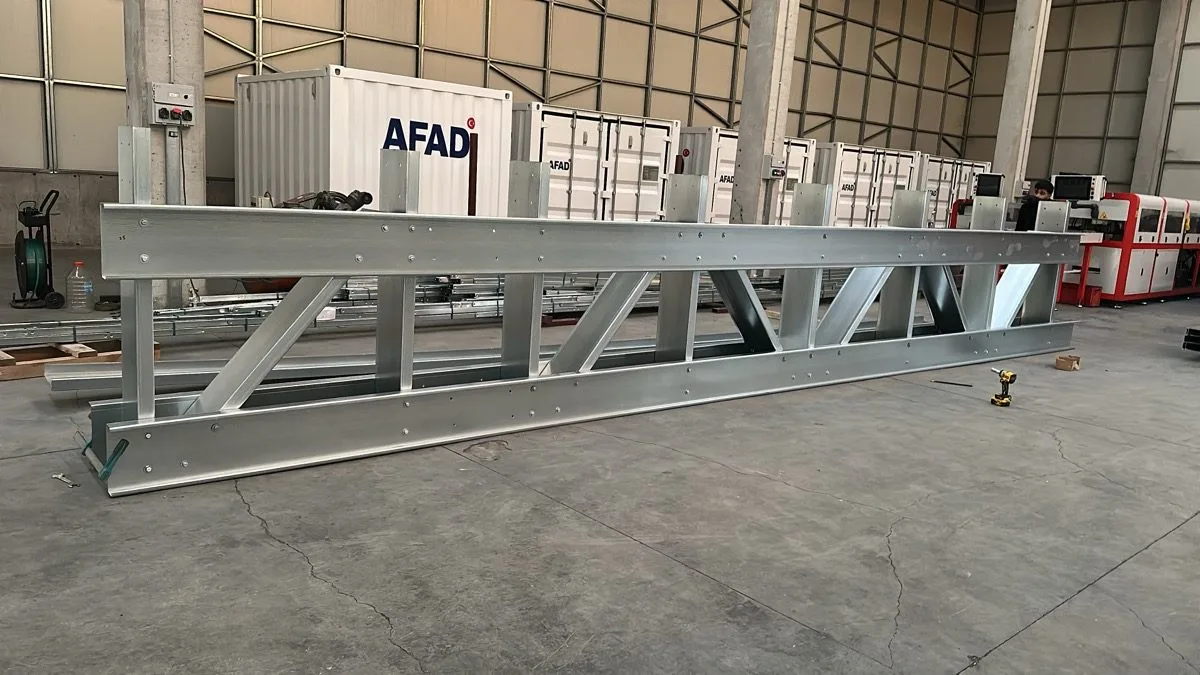
Do prefabricated and light steel buildings need a permit? Zoning status, architectural and structural design, building
22.09.2026 · 7 dk okuma →The items that make up the budget of a prefabricated or container building: structural system, panels and insulation,
22.09.2026 · 8 dk okuma →The steps after ordering a prefabricated, container or light steel building: survey, design, production, quality
22.09.2026 · 6 dk okuma →What makes prefabricated house prices vary? We explain the seven main cost drivers — floor area, insulation, number of…
01.08.2026 · 6 min read →What are the differences between a container and a prefabricated building? We compare the two on portability, cost…
20.07.2026 · 5 min read →Why are light steel buildings considered earthquake-safe? We explain their seismic performance in terms of low weight…
05.07.2026 · 7 min read →Why is steel the key to sustainable building? We look at steel construction through recycling, low waste, energy…
18.06.2026 · 5 min read →How many years a building will be used depends not only on the material but also on the maintenance routine. In galvanized light steel structural systems, the zinc coating quality determines resistance to corrosion, but if water management is poor, meaning the roof pitch, gutters and joint details are inadequate, even the best coating cannot prevent damage. For this reason, regular annual inspection is as important as material selection for the building to be used without problems for many years.
A realistic answer to the question of how many years a prefabricated home lasts is also related to climate conditions and the type of use. Salty air by the sea or an acidic atmosphere in industrial zones wear coatings faster, so maintenance intervals should be shortened in these areas. A simple annual checklist for the roof, facade joints, window and door frames and services ensures small problems are resolved before they grow.
A light steel building is a type of structure formed by applying panels and insulation over a structural system made of galvanized steel profiles. A prefabricated building is the general term for structures that include this system, manufactured in a factory and assembled on site.
Galvanized coating protects steel cathodically against corrosion and provides protection even on processed surfaces such as cuts and holes. With proper detailing and regular maintenance, this structural system can serve for many years.
The period varies depending on galvanizing quality, water management, panel integrity, type of use and climate conditions. If a water-prone point such as a roof joint is neglected, the same structural system can develop problems much sooner.