Asici Group Prefabrik places reducing carbon emissions at the heart of its environmental responsibility across every process — from production to logistics, from assembly to the building's service life. With our low-carbon production technologies and highly energy-efficient building systems, we contribute to the fight against climate change.
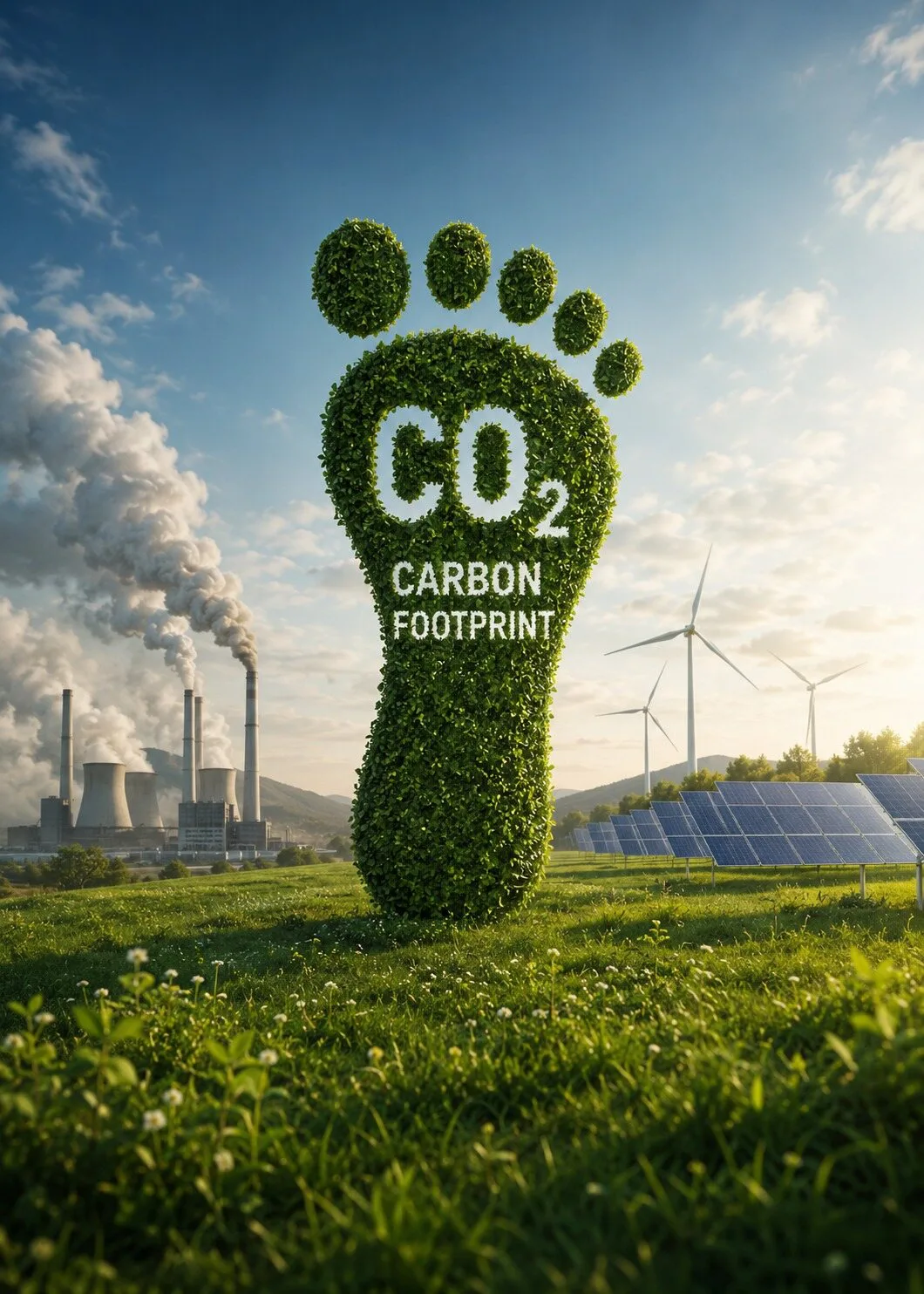
What Is a Carbon Footprint?
A carbon footprint is the total amount of greenhouse gases released into the atmosphere throughout a product's life cycle — from raw material supply and manufacturing to transport and use. The construction sector is responsible for a significant share of global carbon emissions; the choice of production method therefore has a direct impact on the climate.
Low-Carbon Production Technology
Our automated roll-forming lines deliver precise, zero-waste production; compared with conventional construction, buildings of equal strength are produced with less material, less energy and less waste. The controlled factory environment keeps site-related emissions to a minimum.
High Insulation, Low Emissions in Use
Most of a building's carbon footprint comes from energy consumption during its use phase. Our high-density polyurethane (PUR) and stone wool panels reduce heating and cooling demand, cutting carbon emissions throughout the building's lifetime.
A Circular Economy with 100% Recyclable Steel
The steel used in our load-bearing systems is returned to production without losing value at the end of its life. This circular-economy approach reduces the need for raw materials and the carbon emissions that come with them.
Efficient Logistics and Fast Assembly
Flat-packed shipping reduces the number of transport vehicles, while short assembly times cut the machinery and energy used on site. As a result, the building is delivered at a far lower carbon cost than traditional methods.
Our Commitment to Continuous Improvement
We monitor our energy consumption and invest every year in making our production processes more efficient. For us, reducing our carbon footprint is not a project; it is an ongoing commitment and an inseparable part of our sustainability approach.