

The items that make up the budget of a prefabricated or container building: structural system, panels and insulation, windows, services, foundation, transport, assembly. Without quoting prices, we explain each item's share of the budget and what changes it.
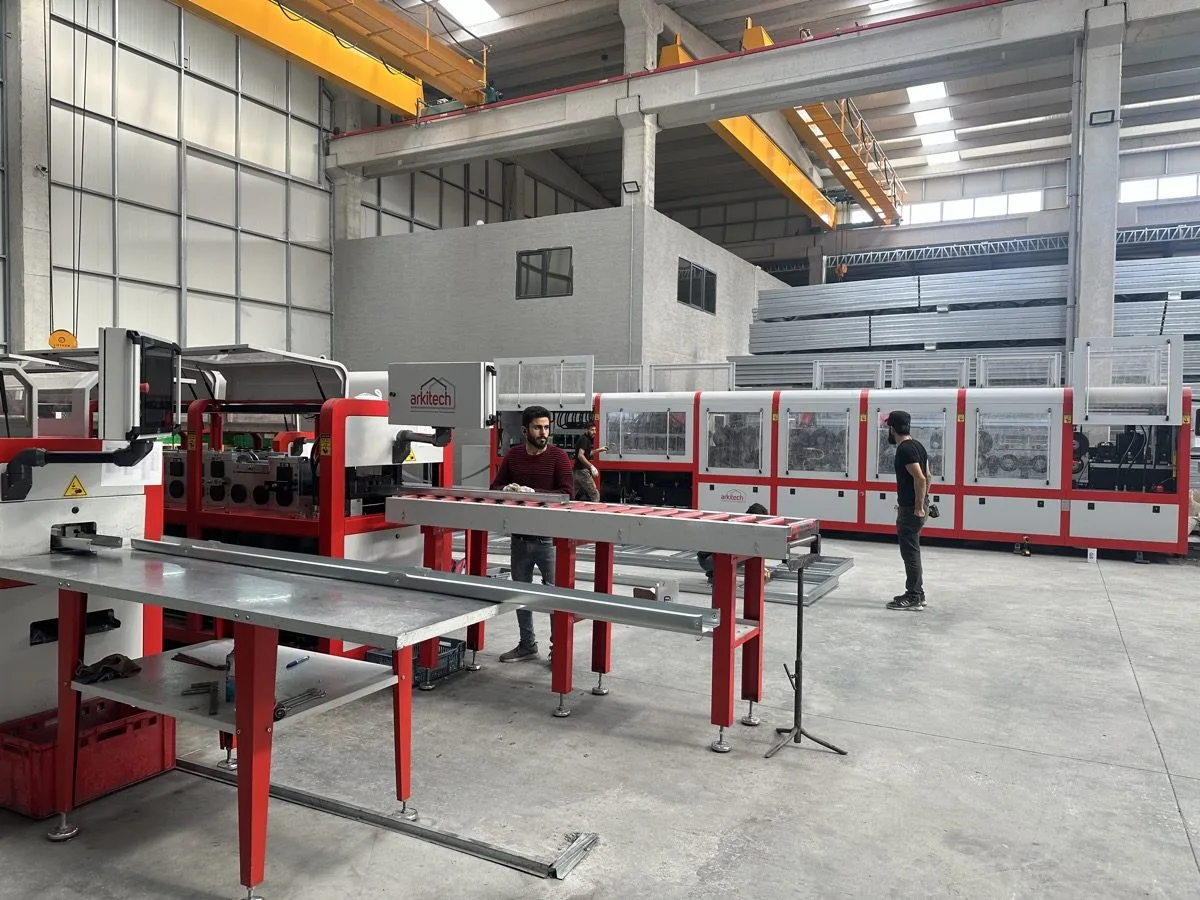
Most people asking for a quote for a prefabricated house, container or light steel building expect a single price per square metre. Such a price can be given, but it misleads; the budget of two buildings of the same area can double depending on fittings and site. In this article, instead of a price, we explain the items that make up the budget, the approximate share of each and what changes that share. The aim is for you to know what you are comparing with what when reading a quote.
In a light steel building this item is the frame of galvanized profiles; in a prefabricated building the panel frame and roof trusses; in a container the chassis and body profiles. Its share of the budget is usually the second highest. Factors that increase the share: number of storeys, wide spans, heavy snow load and high seismic zone calculations. Galvanizing thickness and steel grade (such as S350GD+Z275) determine the price; in a cheap quote this is the first item cut, so ask for the material certificate.
The insulation material of the wall and roof panels (polyurethane, rock wool, EPS) and its thickness determine this item. A thick, non-combustible panel raises the initial budget and lowers heating and cooling costs for years. A low quote with thin panels in a cold region costs more in the operation period.
PVC or aluminium windows, glass type (double, heat control) and external cladding (metal, composite, wood-look) are in this item. The share grows as the glazed area grows. In villas and tourism buildings it is the most variable item of the budget.
Electrical, plumbing, heating and cooling, kitchen and bathroom fittings. Most of the difference between shell delivery and turnkey is here. The number of wet rooms and air conditioners changes the budget directly. When comparing quotes, always ask whether services are included and at what level.
Because a prefabricated building is light, a strip or raft foundation is sufficient on most ground; concrete pads are used for containers. Sloping land, weak ground and a high water table increase the foundation cost. The foundation is usually outside the manufacturer's scope; clarify the scope in quotes.
The distance from the factory (Polatli, Ankara) to the site, the number of trucks and the loading gauge determine this item. Knock-down systems are transported with fewer vehicles; a monoblock container carries fewer units per vehicle. In overseas projects, packing to container dimensions reduces this item.
Assembly crew, crane, scaffolding and accommodation. Site remoteness and difficult access increase the share. As more work is completed at the factory, this item shrinks; in a fully equipped container, site work is limited to placement and connection.
Share your list of needs; we will get back within 48 hours with an itemised quote.
With dimensions and equipment tailored to your project, we will get back to you within 48 hours.
Do prefabricated and light steel buildings need a permit? Zoning status, architectural and structural design, building
22.09.2026 · 7 dk okuma →
The steps after ordering a prefabricated, container or light steel building: survey, design, production, quality
22.09.2026 · 6 dk okuma →
The factors that determine the service life of prefabricated, container and light steel buildings; an annual
22.09.2026 · 6 dk okuma →What makes prefabricated house prices vary? We explain the seven main cost drivers — floor area, insulation, number of…
01.08.2026 · 6 min read →What are the differences between a container and a prefabricated building? We compare the two on portability, cost…
20.07.2026 · 5 min read →Why are light steel buildings considered earthquake-safe? We explain their seismic performance in terms of low weight…
05.07.2026 · 7 min read →Why is steel the key to sustainable building? We look at steel construction through recycling, low waste, energy…
18.06.2026 · 5 min read →